
What goes into the cost of a fence
There is no flat price for a fence. The cost depends on your yard and what you want. We give free on-site estimates so you get a real number, not a guess.
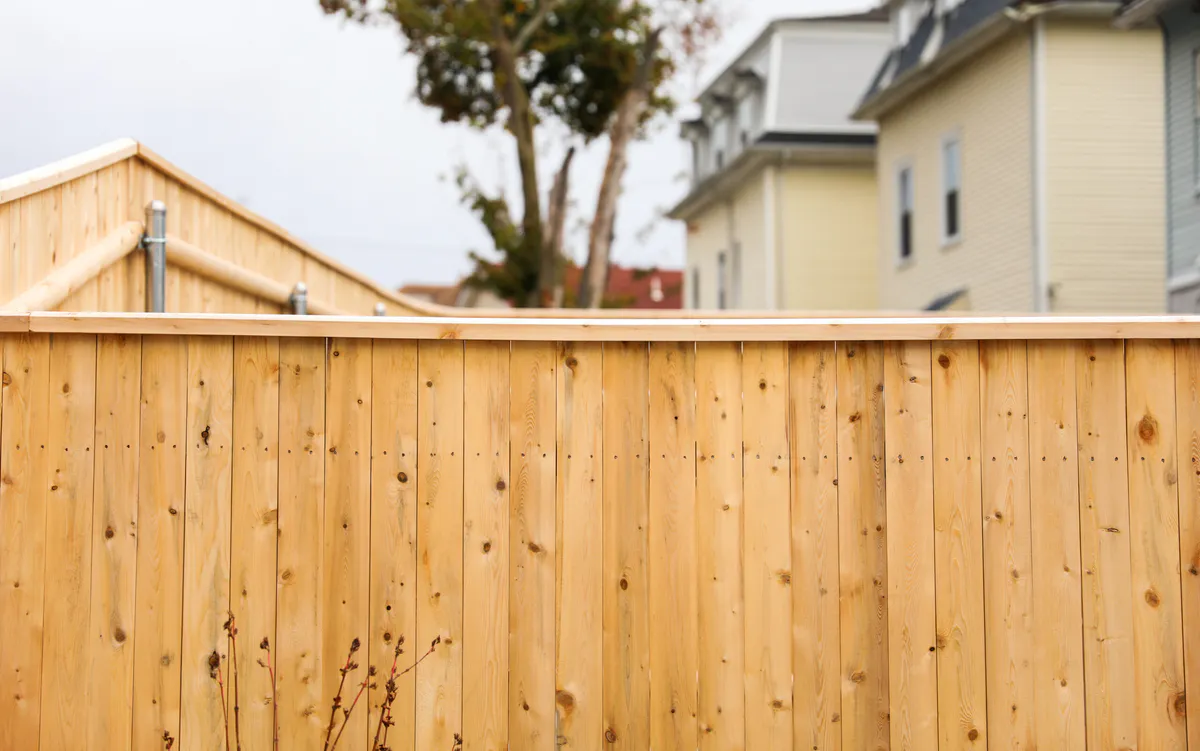
Most people want one number before they call a fence company. The honest answer is that the price changes from yard to yard. A short chain link run on flat ground is a very different job from a tall privacy fence on a wooded, sloped lot with two gates and an old fence to tear out.
Below are the real factors that move the cost up or down. Once you understand them, you can see why a quote needs an actual look at your property. The only way to get your real number is a free on-site measure.
Fence type and material
The kind of fence you choose is the biggest single factor. The three we build use different amounts of material and labor.
Chain link, wood, and privacy fencing use different materials and installation methods. The lower-cost option can change with the height, finish, gates, length, site conditions, and current material pricing, so compare project-specific estimates rather than relying on a universal ranking.
Height
Taller fences generally use more material per foot and may change post, hardware, wind-load, or labor requirements. Permitted height varies by jurisdiction, lot position, and neighborhood rules, so confirm what is allowed for the address before settling on a design.
Length of the run
Fence pricing is tied closely to how many linear feet you are fencing. A larger yard, or one where you want to enclose the full property line instead of just one side, needs more posts, more panels, and more time. The length of the run is one of the first things we measure.
Gates
Gates add to the job. A walk gate is one thing, a wide drive gate that a vehicle can pass through is another, since it needs heavier posts and hardware to swing and latch right. The number of gates and the type you need both affect the final number.
Terrain and slope
Grade, roots, drainage, and soil conditions can change the layout and installation approach. We inspect the proposed route so the estimate reflects the work visible at the property.
Removing an old fence
If there is an old fence in the way, it has to come out before the new one goes in. Pulling posts, taking down panels, and hauling the old material off the property is extra work on top of the new build. A fresh fence on bare ground is simpler than a replacement.
Site access
How easy it is to get to the fence line matters. Tight side-yard access, soft or wet soil, and tree roots all slow the work down. If our crew has to carry material a long way or dig through hard conditions, that takes more time.
Permits and HOA approval
Permit and HOA requirements depend on the address and proposed fence. They can affect the design and project timeline, so confirm them before installation. See our guide to fence permits and rules on the Northshore for official resources and a practical checklist.
So what will yours cost?
It depends on the factors above, and they stack together differently for every property. That is why we do not post a price list. The only way to get your real number is a free on-site measure. We walk the yard, talk through your options, and give you straight pricing for your project.
Looking at a specific fence?
Read the details on each type we install: wood fencing, privacy fencing, and chain link fencing.
Fence cost FAQs
How much does a fence cost in Slidell?
There is no single price for a fence. What you pay depends on the things covered on this page: the fence type, the height, how long the run is, how many gates you need, the shape of your yard, and whether an old fence has to come out first. The only way to get your real number is a free on-site measure, where we look at the yard and put together pricing built for your project.
Is wood or chain link cheaper?
The lower-cost option depends on the length, height, finish, gates, site conditions, and current material pricing. Chain link and wood use different materials and installation methods, so an on-site estimate is the reliable way to compare them for your yard.
Does a taller fence cost more?
Usually. A taller fence generally requires more material and may change post, hardware, wind-load, or labor requirements. Allowed height also varies by address, so we confirm the proposed height before pricing the project.
Do I pay for the estimate?
No. The on-site estimate is free. We come out, measure the yard, talk through your options, and give you pricing with no charge and no pressure.
Get a real number for your yard
Tell us about the fence you want and we will come measure. You get straight pricing built for your property, with no charge and no pressure.